Sealcoating 101: Protecting Your Asphalt Driveway Through New England Winters
- July 15, 2026
- Blog
A freshly paved driveway is an investment, and like any investment, it needs upkeep to hold its value. In Rhode Island and Massachusetts, where our driveways endure everything from summer heat to brutal winter freeze-thaw cycles, sealcoating is one of the simplest and most cost-effective ways to protect that investment. Here’s what every homeowner should know.
What Sealcoating Actually Does
Asphalt is a mix of aggregate and petroleum-based binder. Over time, sun exposure, rain, and road salt break down that binder, leaving the surface dry, brittle, and prone to cracking. Sealcoating adds a protective layer on top of the asphalt that:
- Shields the surface from UV rays and oxidation
- Repels water, oil, and gas spills before they can soak in
- Slows the formation of new cracks
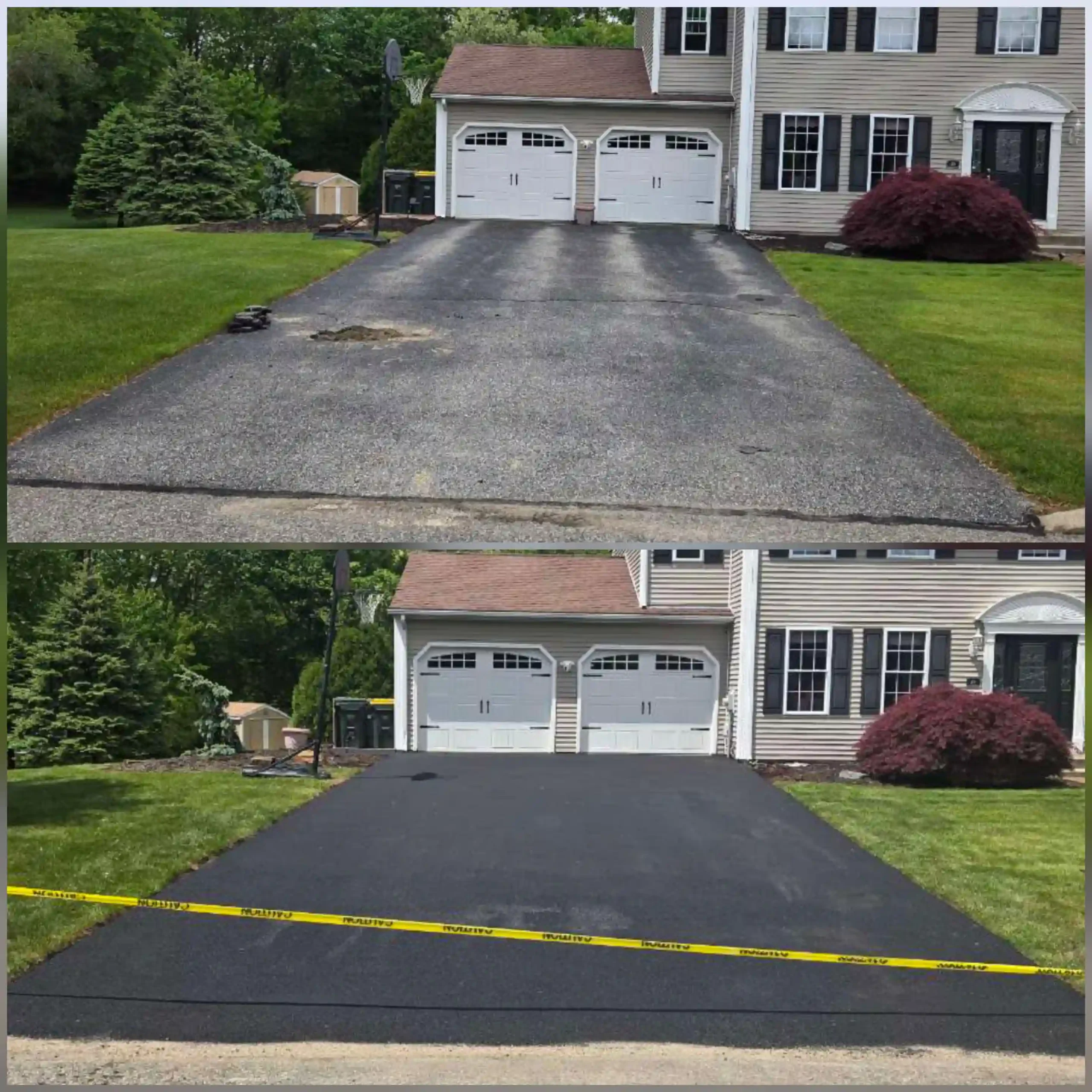
- Restores that deep black, freshly-paved look
It won’t fix existing structural damage, but it goes a long way toward preventing new damage from starting.
Why Crack Sealing Comes First
Before sealcoating, it’s important to address any existing cracks. Left untreated, even hairline cracks let water seep down to the base layer. When temperatures drop below freezing — which happens a lot around Woonsocket — that trapped water expands and forces the crack wider. This is how a small, cheap-to-fix crack turns into a pothole in a single winter. Crack sealing fills those gaps before they have a chance to spread, and it should always happen before a fresh coat of sealer goes down.
How Often Should You Sealcoat?
Most driveways in our region benefit from sealcoating every two to three years, though it depends on traffic, sun exposure, and how the driveway was originally installed. A newly paved driveway typically needs about six to twelve months to fully cure before its first sealcoat — applying it too early can actually trap moisture and cause problems down the line.
Timing It Right in New England
The best window for sealcoating in Rhode Island and Massachusetts is generally late spring through early fall, when temperatures are consistently warm enough for the sealer to cure properly. Trying to sealcoat too late in the season, right before the first frost, doesn’t give the product enough time to set — which is why it’s worth scheduling this maintenance well before winter weather rolls in.
A Small Job With a Big Payoff
Compared to the cost of a full repave, sealcoating and crack sealing are minor expenses that meaningfully extend the life of your driveway. It’s one of those maintenance tasks that’s easy to put off — until the crack you ignored becomes a pothole you can’t.
If it’s been a few years since your driveway was sealed, or you’re not sure whether it’s due, we’re happy to take a look. As a locally owned company with four generations of experience paving Rhode Island and Massachusetts properties, we know exactly how our regional climate treats asphalt — and how to help it last.
Reach out for a free consultation and let’s keep your driveway road-ready for the seasons ahead.