How a New Driveway Gets Installed in Warwick, RI
- August 28, 2026
- Warwick
How a New Driveway Gets Installed in Warwick, RI
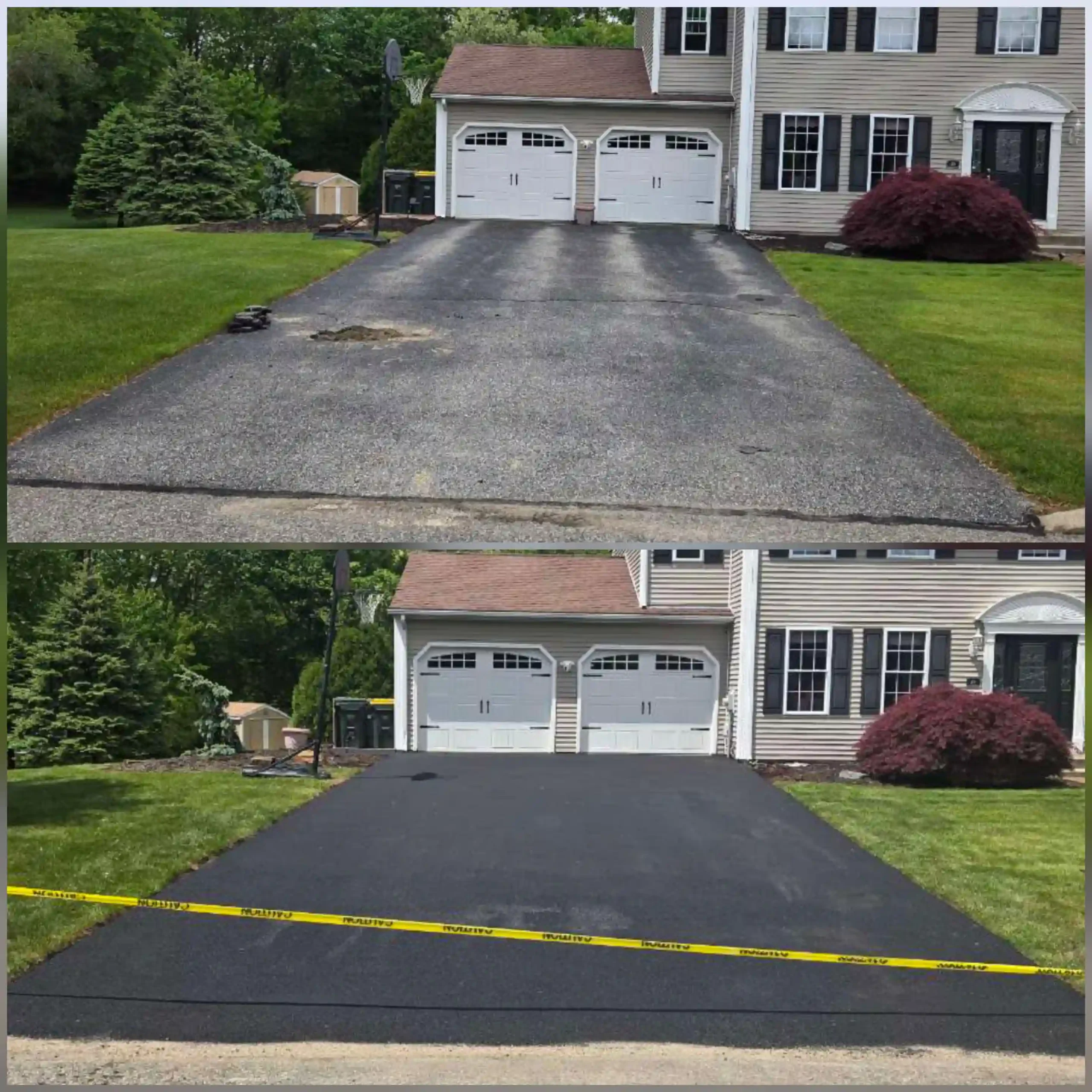
Most homeowners have never watched a driveway go in. You get an estimate, you pick a date, trucks show up, and two days later there's fresh blacktop where the old cracked surface used to be.
That's fine right up until something on site doesn't match what you pictured. The crew wants to shift the apron two feet. The excavation turns up soft fill nobody expected. The slope has to run toward the street instead of the side yard.
Knowing the sequence ahead of time makes those conversations a lot easier, and it makes it obvious whether the crew on your property is doing the job properly or rushing the part that matters most.
Here's how a residential driveway installation actually runs in Warwick, start to finish.
What Are the Steps in a Driveway Installation?
A standard installation runs through six stages: site visit and estimate, excavation, grading, base installation, paving, and compaction. On most Warwick driveways the on site work takes one to three days.
The order never changes. What changes is how much time each stage takes, and that depends almost entirely on what's under the old driveway.
The Site Visit and Estimate
A proper estimate happens on the property, not over the phone. The contractor measures the area, checks the slope, looks at where water currently drains, and assesses access for equipment.
Square footage sets the material cost. Everything else on that walk sets the labor cost, and that's the part phone quotes get wrong.
Watch for whether they check drainage. A contractor who measures the driveway and never looks at where water goes is quoting a surface, not a driveway.
You should leave that visit with a written scope covering thickness, base depth, and what happens to the old material.
Excavation and Removing the Old Surface
The old asphalt gets broken up and hauled off, along with enough soil underneath to make room for a proper base. Expect equipment on the property and a dump truck cycling in and out.
Depth varies by site. The crew digs until they reach material that will support the driveway, which sometimes means going deeper than planned when soft fill turns up.
Old asphalt is usually recyclable, so ask where it goes. It shouldn't end up buried in your yard.
Grading and Base Installation
This is the stage that determines how long the driveway lasts. The subgrade gets shaped so water runs off, then gravel goes down in layers and each layer gets compacted before the next one.
Typical residential base depth in New England runs six to eight inches of compacted gravel, though your site conditions set the real number.
Two details worth watching:
- Layered compaction. Gravel dumped all at once and rolled from the top doesn't compact all the way down
- Slope established here. Pitch is built into the base, not corrected later with extra asphalt
If a crew moves from excavation to paving in a single afternoon, the base didn't get the attention it needed. That shortcut is the most common reason driveways fail early .
Laying and Compacting the Asphalt
Hot mix asphalt arrives at temperature and has to be spread and rolled before it cools. Residential driveways usually get two to three inches of compacted asphalt, sometimes split into a binder layer and a surface layer.
Compaction is what turns loose mix into pavement. Rolling has to happen while the material is still hot, which is why crews work quickly once the trucks arrive.
Edges get special attention. Asphalt has no lateral support at the perimeter, so a good crew tapers and compacts the edges rather than leaving them square and vulnerable.
What Warwick Site Conditions Change About the Job
Coastal lots and older neighborhoods both add steps. Near the bay, a high water table means drainage has to be solved before anything else. In older sections of town, the surprise is usually what's buried under the existing driveway.
Around Apponaug, Pontiac, and Hoxsie, many driveways were built decades ago over whatever fill was available. Excavation there turns up more variables than a newer lot in Cowesett or Greenwood does.
Tight lots matter too. Narrow driveways and close setbacks limit which equipment fits, and street access on the smaller roads off Post Road can dictate where trucks stage.
None of this is unusual. It just means the estimate should reflect your actual site rather than a per square foot average.
Decisions You'll Make Before the Crew Arrives
Width, apron shape, and drainage direction all get settled before paving day. Changing any of them once base work is done is expensive.
Think through these ahead of the site visit:
- Width. Two cars side by side needs meaningfully more room than most existing driveways have
- The apron. Where the driveway meets the street affects both appearance and how water leaves
- Turnaround or parking pad. Cheaper to include now than to add later
- Where water should go. Toward the street, a swale, or a drain, but somewhere deliberate
- Edge treatment. Whether you want a defined edge, a lawn taper, or Belgian block
Caring for a New Driveway Its First Year
Stay off it for at least 24 hours, and keep heavy vehicles off for several days. Fresh asphalt stays soft while it cures, and the first summer is when it's most vulnerable.
The first year checklist:
- Avoid turning your steering wheel while stopped. It scuffs soft asphalt
- Keep trailer jacks, dumpsters, and kickstands off the surface or on a plywood pad
- Stay off the outer edges with vehicle tires
- Wait six to twelve months before sealing so the surface cures fully
- Watch how it drains during the first heavy rain and report any pooling right away
That last one matters most. Drainage problems are far easier to correct in the first season than after a few Rhode Island winters have worked on them .
Frequently Asked Questions
How long does a new driveway take to install?
Most residential installations in Warwick take one to three days depending on size, excavation depth, and whether drainage work is needed.
How thick should a residential asphalt driveway be?
Generally two to three inches of compacted asphalt over six to eight inches of gravel base, though site conditions can change both numbers.
Do I need to be home during installation?
Not for the whole job, but be available on day one. Layout and slope decisions are easier to confirm in person than over the phone.
When can I park on a new asphalt driveway?
After about 24 hours for normal vehicles. Keep heavy trucks and trailers off for several days while the surface cures.
What happens to my old driveway material?
Reputable contractors haul it off for recycling. Ask where it's going before work starts.
Ready to Talk About Your Driveway?
A good installation is mostly invisible. The parts that determine whether it lasts twelve years or thirty happen before any asphalt goes down.
Masterson Paving builds residential driveways across Warwick, and every estimate starts with a walk of the property, a look at where water actually goes, and a written scope you can hold the crew to. Call (401) 681-3890 for a free on site estimate, or see the driveway work handled throughout Warwick .
Trending Posts
-
 28 Aug 2026 WarwickWhat Shortens a Driveway's Life in Warwick, RI
 -
 28 Aug 2026 WarwickHow a New Driveway Gets Installed in Warwick, RI
 -
 28 Aug 2026 WarwickSealcoating vs Crack Filling for Warwick Driveways
 -
 28 Aug 2026 WarwickDriveway Resurfacing vs Replacement in Warwick, RI
 -
 28 Aug 2026 WarwickWhy Warwick Driveways Crack Every Spring in RI