Why Warwick Driveways Crack Every Spring in RI
- August 28, 2026
- Warwick

Why Warwick Driveways Crack Every Spring in RI
Ask any homeowner off Post Road, Warwick Avenue, or up in Cowesett what their driveway looks like the first warm week of April. The answer is usually the same, cracks that weren't there in November, a low spot holding water near the garage apron, and edges that have started to crumble away from the lawn.
It isn't bad luck, and it usually isn't bad asphalt. It's water and temperature doing the same thing to pavement across Kent County every single winter.
Understanding what's happening under your driveway makes the difference between a $300 crack fill in September and a full tear out three years from now. Here's how freeze and thaw damage works in Warwick, which cracks matter, and what keeps a driveway holding together through Rhode Island winters.
What Causes Driveway Cracks in Warwick, RI?
Most driveway cracks in Warwick come from water getting into the asphalt and freezing. As it freezes, it expands and pries the pavement apart from the inside.
Three things usually work together to make it happen:
- Water intrusion through hairline surface cracks or unsealed edges
- A weak base that was never compacted properly and shifts under load
- Sun and age, which dry out the binder holding the asphalt together
A driveway with a solid base and good drainage can shrug off winters for decades. One built on soft fill starts telling on itself by year three.
How Freeze and Thaw Cycles Break Down Rhode Island Pavement
Freeze and thaw damage happens when water seeps into a small crack, freezes, and expands roughly nine percent, widening the crack a little more each time. Rhode Island runs through dozens of these cycles a season, so the damage compounds fast.
Southern New England is especially rough on pavement because we hover around the freezing mark instead of staying locked below it. A stretch of 38 degree days followed by a hard overnight freeze does more damage than a solid month at 20.
Each cycle pushes water a little deeper. Once it reaches the gravel base, saturated material shifts under the weight of a vehicle and the surface starts to sink.
Why Coastal Warwick Driveways Take Extra Abuse
Warwick's shoreline neighborhoods deal with conditions that inland towns don't, a higher water table, sandier soils, and salt air rolling off Greenwich Bay.
In areas like Oakland Beach, Conimicut, and Longmeadow, groundwater sits closer to the surface. That means the base under a driveway stays damp longer into spring and has less room to drain after a storm.
Add the road salt and brine tracked in off Route 117 and Post Road all winter, and you've got a surface being worked on from above and below. Proper grading matters more here than almost anywhere else in the state.
Which Driveway Cracks Are Serious and Which Can Wait
Narrow hairline cracks are normal and can usually be sealed. Interconnected cracking that looks like alligator skin, potholes, and sunken areas are base problems, and those don't wait.
Watch for these warning signs:
- Alligator cracking: the base is failing under that section
- Potholes: water has already washed material out from underneath
- Shallow dips and low spots: settlement or poor compaction
- Crumbling edges: no shoulder supporting them from the side
A crack you can slide a credit card into is a maintenance item. One you can fit a finger into is a repair conversation.
Repair, Resurface, or Replace: How to Tell the Difference
The base decides. If it's still sound, targeted patching or a fresh surface layer will hold. If the base has failed, anything applied on top fails with it.
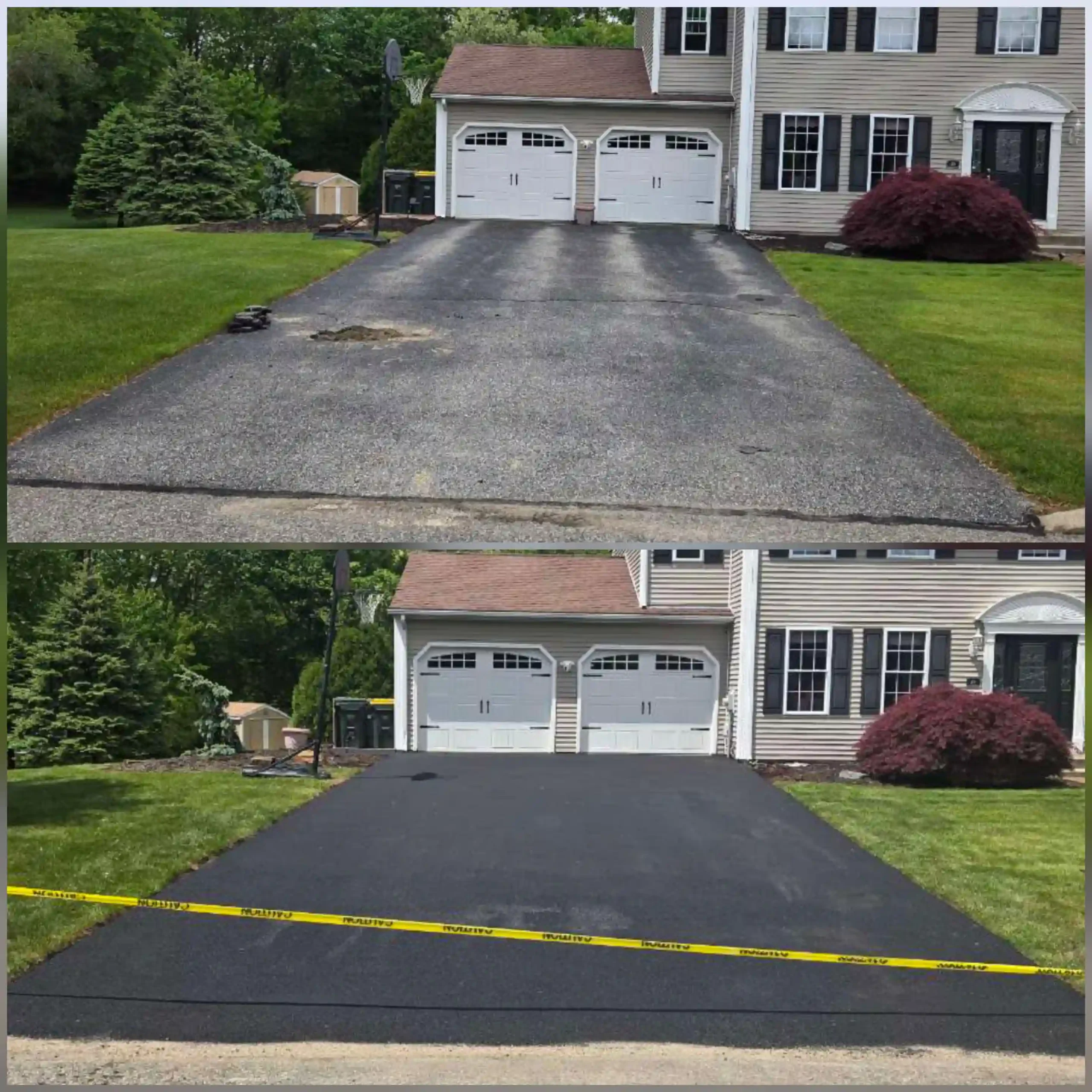
Isolated potholes and cracks get patched. A driveway that's structurally fine but tired looking gets resurfaced, with new hot mix over the existing surface at a fraction of full replacement cost.
Widespread alligator cracking, standing water, or multiple sunken areas point to a full rebuild down to subgrade. Any honest estimate should tell you which camp you're in before quoting a number.
Why Grading and Drainage Decide How Long a Driveway Lasts
Standing water destroys more Rhode Island driveways than traffic ever will. Grading for drainage is the single most important step in any driveway paving project .
Water needs somewhere to go, a consistent pitch away from the garage, toward the street or a swale. A quarter inch of fall per foot is a common target on residential work.
Skip that step and you've built a shallow basin that fills every time it rains, then freezes solid in January.
How to Protect a Warwick Driveway Before Winter
Seal cracks in early fall, before the first freeze, and keep water moving off the surface. That's the bulk of it.
A few habits that stretch pavement life:
- Fill cracks wider than a quarter inch each autumn as part of routine asphalt upkeep
- Keep gutters, downspouts, and drains discharging away from the pavement
- Use a plow blade with a rubber edge, or ask your service to
- Go easy on ice melt products. Sand gives traction without the chemical load
- Keep heavy trucks and dumpsters off unsupported edges, especially in summer heat
When to Schedule Paving Work in Rhode Island
Late spring through early fall is the window, roughly May into October, when daytime temperatures stay reliably above 50 degrees. Asphalt needs warmth to compact properly.
Paving in cold weather cools the mix too fast to reach full density, which leaves the surface porous and vulnerable to the exact cycle you're trying to survive.
August and September book out quickly across Warwick, Cranston, and East Greenwich. If you spotted damage this spring, that's the time to get it handled, not next April after another winter has widened it.
Frequently Asked Questions
How long should an asphalt driveway last in Warwick?
With a solid base and good drainage, 20 to 30 years is realistic in Rhode Island. Poor drainage can cut that in half.
Can driveway cracks be repaired in winter?
Cold pour crack filler works as a temporary fix, but permanent repairs need warmer weather. Most Warwick homeowners patch in winter and handle it properly in spring.
Is sealcoating the same as crack filling?
No. Crack filling seals individual openings. Sealcoating adds a protective layer across the whole surface. Crack filling matters more for structural protection.
Why does my driveway crack near the garage apron?
That's usually where water collects and where vehicles turn and brake most. Both concentrate stress on the same few feet of pavement.
Does road salt damage asphalt driveways?
Salt is harder on concrete than asphalt, but the brine it creates keeps water liquid longer, feeding it into cracks before it refreezes.
How soon should new asphalt be sealed?
Wait six to twelve months. Fresh pavement needs time to cure before sealer goes down.
Get a Straight Answer on Your Driveway
If your driveway came out of this winter looking worse than it went in, the cracks won't fix themselves. They'll just be wider next April.
Masterson Paving works with homeowners throughout Warwick and across Rhode Island and Massachusetts, and every estimate starts with an honest read on whether you're looking at a repair, a resurface, or a rebuild. Call (401) 681-3890 to schedule a free on site look, or see the full range of paving work handled across the region .
Trending Posts
-
 28 Aug 2026 WarwickWhat Shortens a Driveway's Life in Warwick, RI
 -
 28 Aug 2026 WarwickHow a New Driveway Gets Installed in Warwick, RI
 -
 28 Aug 2026 WarwickSealcoating vs Crack Filling for Warwick Driveways
 -
 28 Aug 2026 WarwickDriveway Resurfacing vs Replacement in Warwick, RI
 -
 28 Aug 2026 WarwickWhy Warwick Driveways Crack Every Spring in RI