Sealcoating vs Crack Filling for Warwick Driveways
- August 28, 2026
- Warwick
Sealcoating vs Crack Filling for Warwick Driveways
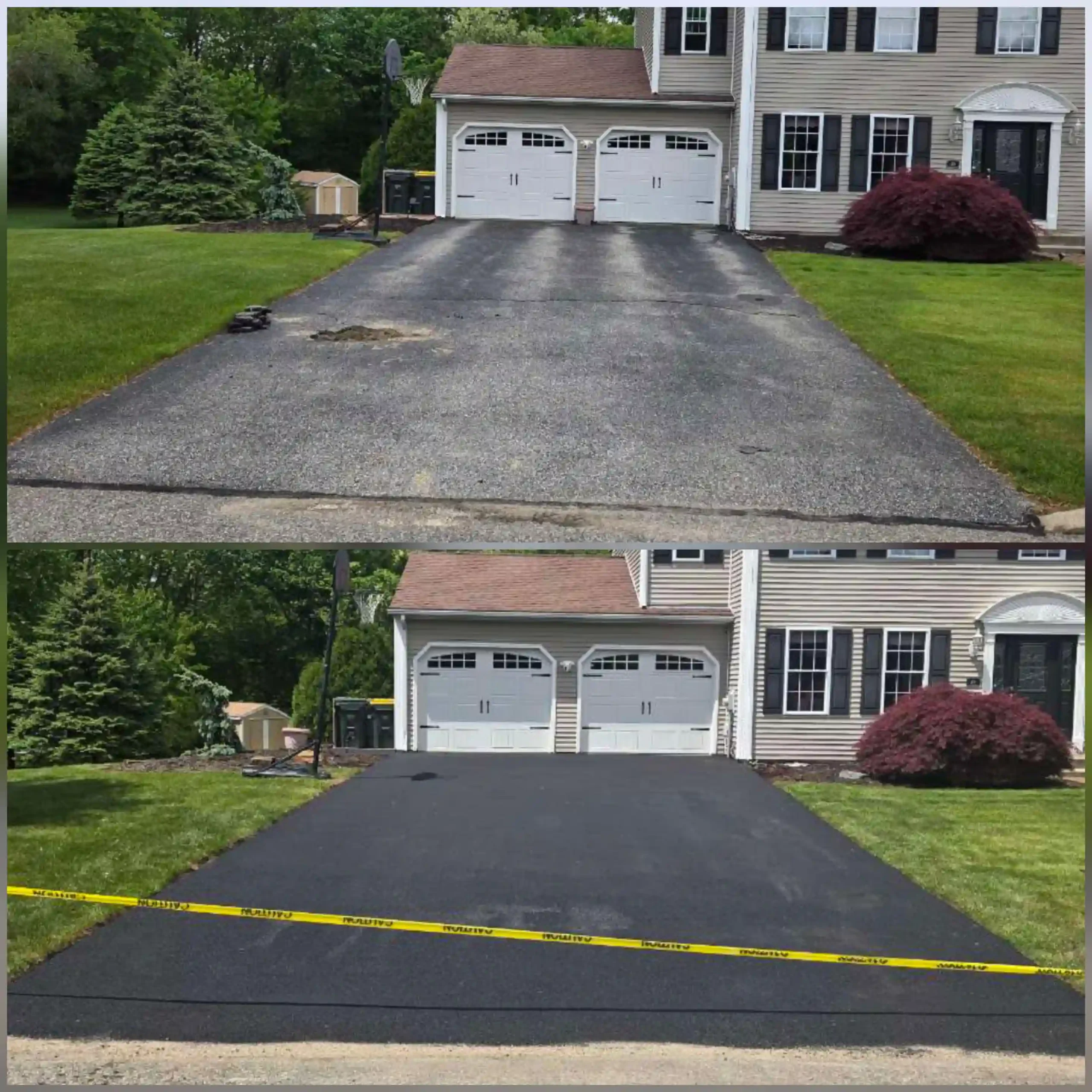
Sealcoating is the maintenance homeowners actually do. It's visible, it's satisfying, the driveway goes from gray back to black in an afternoon, and the neighbors notice.
Crack filling is the one that gets skipped. It's tedious, the driveway looks roughly the same afterward, and there's no dramatic before and after photo at the end.
Which is unfortunate, because of the two, crack filling is the one doing the structural work.
That doesn't make sealcoating pointless. It makes the order matter. Get the sequence right and both jobs earn their cost. Get it backward and you've made the driveway look better while leaving the real problem untouched. Water will still find its way through the cracks and into the base below.
What's the Difference Between Sealcoating and Crack Filling?
Sealcoating applies a thin protective coating across the entire driveway surface. Crack filling injects flexible material into individual cracks to keep water out of the base underneath.
One treats the whole surface against sun, oxidation, and spills. The other treats specific openings that lead down into the structure.
They solve different problems, which is why doing one doesn't substitute for the other.
What Sealcoating Actually Does
Sealcoating protects asphalt from UV rays, oxidation, water penetration, and automotive fluids. It slows the surface from drying out and turning brittle.
Fresh asphalt is flexible because of the binder holding the aggregate together. Sun and air break that binder down over time, which is why aging pavement goes gray and starts to fray at the surface.
What sealcoating does not do:
- It adds no structural strength to the driveway
- It won't fix or bridge existing cracks
- It won't correct drainage or pooling
- It won't help a driveway with a failing base
Think of it as sunscreen, not surgery. Valuable on a healthy surface, useless on a failing one.
What Crack Filling Does and Why It Matters More
Crack filling seals the pathways water uses to reach the gravel base. That's the difference between surface maintenance and structural protection.
Once water gets into the base, it saturates the material, freezes, and starts moving the foundation your driveway sits on. That cycle is what breaks Rhode Island pavement apart , and it begins at cracks most people walk past without noticing.
Worth knowing: Homeowners often use crack filling and crack sealing interchangeably, and many contractors do too. Depending on the width, movement, and condition of the cracks, a contractor may recommend different repair materials, including hot-applied rubberized sealants or other flexible fillers. The important thing isn't the name of the product, it's making sure cracks are properly repaired before water reaches the base.
Which One Does Your Driveway Need First?
Crack filling comes first, always. Sealcoating over unfilled cracks traps moisture below the coating and leaves the openings underneath completely unaddressed.
The correct sequence on a driveway needing both:
- Clean out and fill every crack wider than a quarter inch
- Let the filler cure per the product's requirements
- Sealcoat the full surface
Doing it the other way around is one of the more expensive mistakes in driveway maintenance, because it looks finished while the underlying problem keeps progressing.
How Often Should You Sealcoat in Rhode Island?
Every two to four years for most driveways, and not more often than that. Over sealcoating is a real problem, not a myth.
Sealer builds up in layers. Too many coats applied too frequently create a thick, brittle shell that cracks and peels away from the asphalt underneath, which looks considerably worse than the oxidation you were trying to prevent.
Crack filling runs on a different schedule. Check for new cracks every fall and fill what's opened up. That's an annual habit, not a multi year cycle.
New pavement waits longest of all. Give fresh asphalt six to twelve months to cure before the first sealcoat.
When Sealcoating Is a Waste of Money
Skip it if the driveway shows alligator cracking, potholes, or sunken areas. Those are base failures, and a surface coating over structural damage is money spent hiding a problem.
Don't bother sealcoating when:
- The base is failing and replacement or resurfacing is the real answer
- The asphalt is less than six months old
- Cracks haven't been filled yet
- The last sealcoat was applied within the past two years
- Water pools on the surface after every rain
That last one is a grading issue. Sealer follows the same contours the driveway already has.
Why Warwick's Exposure Changes the Schedule
Coastal driveways oxidize faster than inland ones, so Warwick homeowners near the water often land at the shorter end of the two to four year window.
Salt carried in off Greenwich Bay works on pavement year round, not just during the months when road treatment is running. Combine that with full sun exposure and a surface ages noticeably faster than the same driveway would in a shaded inland lot.
Neighborhoods like Warwick Neck, Oakland Beach, and Buttonwoods see it first. Driveways under tree cover in Cowesett or Greenwood generally stretch closer to four years between coats.
The surface tells you when. Gray, dry looking pavement with fine surface fraying is ready. Still dark and flexible means wait.
When to Schedule Each Job
Both need temperatures reliably above 50 degrees, which means the season runs late spring through early fall in Rhode Island. Sealer also needs a dry stretch, ideally 24 hours without rain on either side.
The practical calendar for Warwick:
- Crack filling: early fall, before the first hard freeze, so openings are closed going into winter
- Sealcoating: late spring through early fall, on a dry forecast
- Both in one season: fill first, allow cure time, then seal
Fall books out fast around here. Homeowners tend to think about it the same week the first cold snap arrives, which is already a little late.
Frequently Asked Questions
Can you sealcoat over cracks?
You can, but you shouldn't. Sealer doesn't bridge cracks, and coating over them traps moisture in the base while leaving the openings unsealed.
How often should a driveway be sealcoated in Rhode Island?
Every two to four years. Coastal Warwick driveways often need it sooner because salt air and sun exposure accelerate surface oxidation.
Is sealcoating worth the money?
On a structurally sound driveway, yes. On one with alligator cracking or a failing base, no. It treats appearance and surface wear only.
What size crack can be filled?
Roughly a quarter inch up to about an inch. Wider than that, or interconnected cracking, usually means patching or resurfacing instead.
Can I sealcoat a brand new driveway?
Wait six to twelve months. Fresh asphalt needs to cure fully before sealer goes down or the coating won't bond properly.
Not Sure Where Your Driveway Stands?
The honest answer for a lot of Warwick driveways is that neither job is the right call, because the damage has already moved past what surface maintenance can address. Knowing that before you spend is worth something.
Masterson Paving will tell you straight whether your driveway needs crack filling, sealing, both, or something more substantial. Including when the answer is that it doesn't need anything yet. Call (401) 681-3890 for a free on site look, or see the asphalt maintenance work handled around Warwick .
Trending Posts
-
 28 Aug 2026 WarwickWhat Shortens a Driveway's Life in Warwick, RI
 -
 28 Aug 2026 WarwickHow a New Driveway Gets Installed in Warwick, RI
 -
 28 Aug 2026 WarwickSealcoating vs Crack Filling for Warwick Driveways
 -
 28 Aug 2026 WarwickDriveway Resurfacing vs Replacement in Warwick, RI
 -
 28 Aug 2026 WarwickWhy Warwick Driveways Crack Every Spring in RI