Driveway Resurfacing vs Replacement in Warwick, RI
- August 28, 2026
- Warwick
Driveway Resurfacing vs Replacement in Warwick, RI
There's a point every Warwick homeowner reaches where patching stops making sense. The driveway has been repaired twice, the cracks keep reopening in the same places, and the whole surface has gone that faded gray color that no amount of sealer fixes.
That's the fork in the road. Resurface, or tear it out and start over.
Pick wrong in one direction and you spend thousands more than you needed to. Pick wrong in the other and you pay for a beautiful new surface that fails in four years because the problem was never on top.
The answer isn't really a judgment call, though. It comes down to one thing: whether the base under the driveway is still doing its job. Read that right and you'll know which option you're looking at before anyone shows up with a truck.
What's the Difference Between Resurfacing and Replacement?
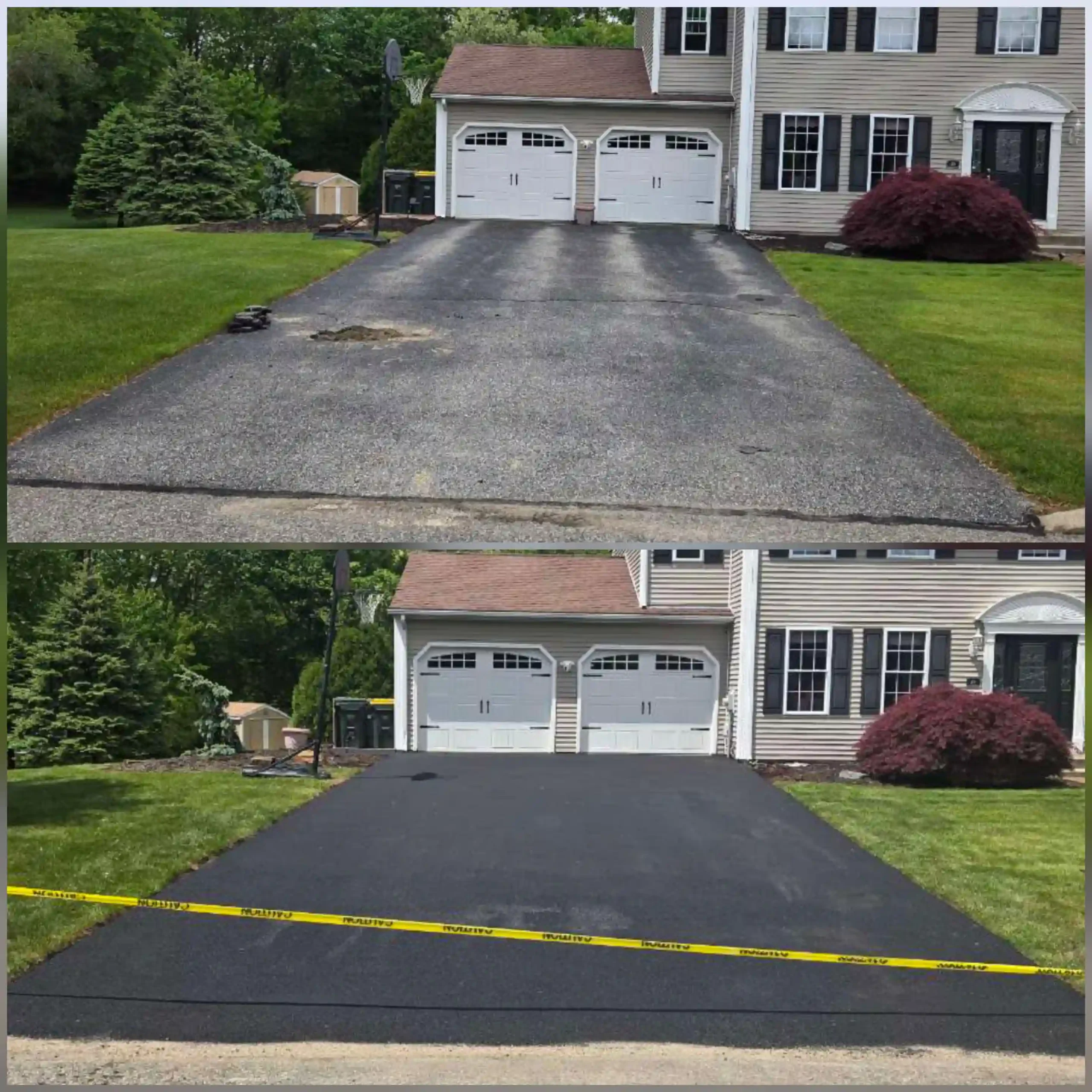
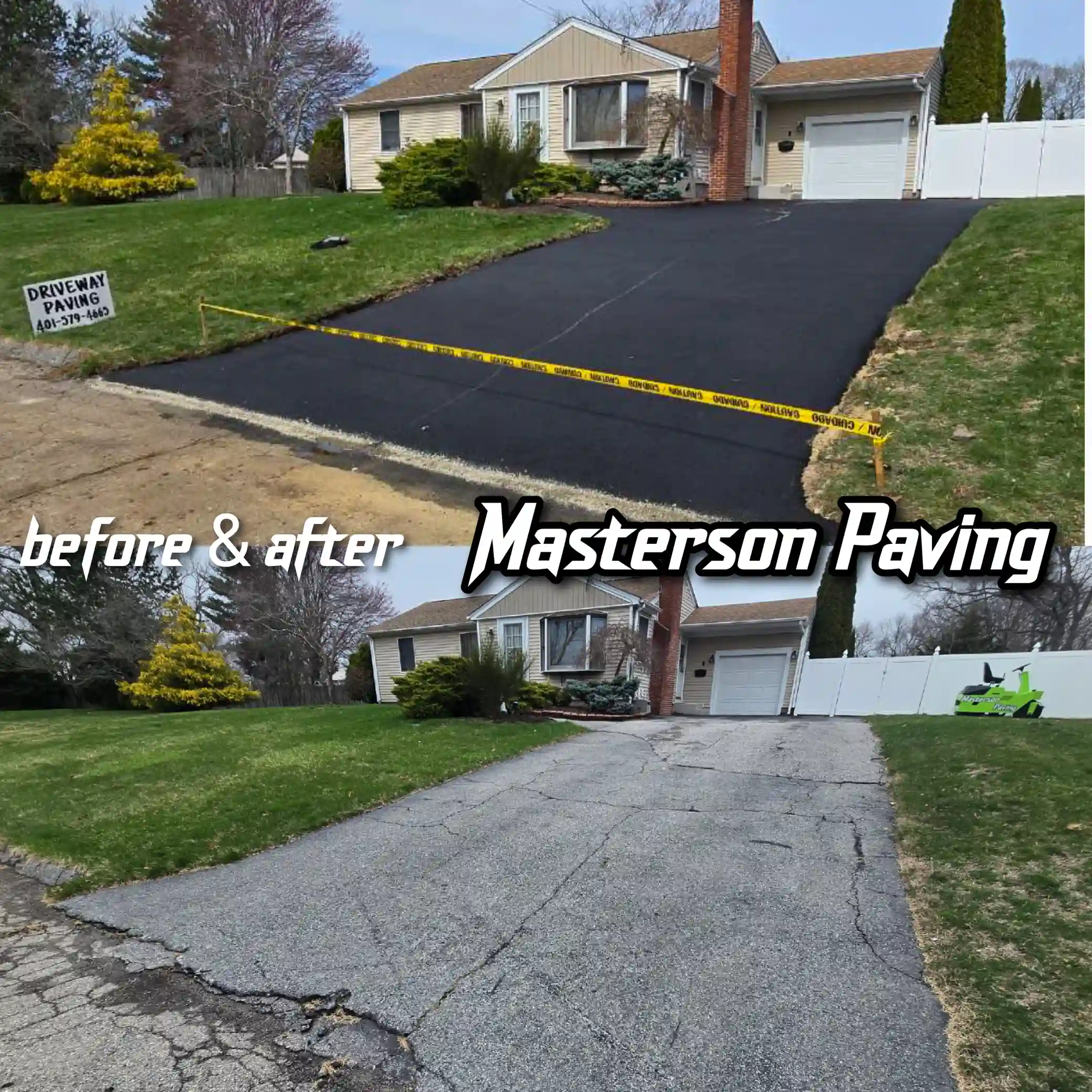
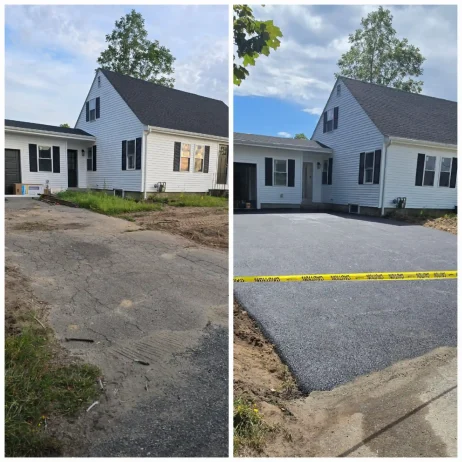
Resurfacing lays a new layer of hot mix asphalt over your existing driveway. Replacement removes everything down to the subgrade and rebuilds the driveway from the ground up.
Resurfacing keeps the old pavement in place and uses it as the foundation for a fresh top layer, usually an inch and a half to two inches thick.
Replacement means excavation. The old asphalt comes out, the gravel base gets regraded or rebuilt, and new pavement goes down over a foundation that's been corrected.
One is a surface fix. The other is a structural one. Which is why appearance is a poor guide here. A driveway can look rough and have a perfectly sound base, and another can look passable while sitting on saturated, shifting fill.
Signs Your Driveway Base Is Still Sound
The base is likely fine if the damage has stayed on the surface and the driveway still holds its shape under weight.
Look for:
- Cracks that run in straight lines rather than branching into each other
- A surface that stays flat when a car parks on it
- Damage concentrated in one area rather than spread across the whole slab
If that describes your driveway, a fresh surface layer is almost certainly the smarter spend.
Signs Your Driveway Needs Full Replacement
Alligator cracking, potholes, and sunken sections mean the base has already given up. Those are structural failures, and resurfacing over them just hides the problem for a season or two.
The clearest tells:
- Alligator cracking: interconnected cracks in a pattern like scales
- Potholes: material has already washed out from underneath
- Sunken or dished areas: the base is shifting or was never compacted
- Water pooling in the same spot every rain: a grading problem no top layer will fix
- Multiple failed patches: the driveway keeps telling you where the real issue is
More than three or four inches of existing asphalt is another factor. Stacking another layer on a driveway that's already been resurfaced once creates height problems at the garage and the street.
How Warwick's Soil and Drainage Change the Math
Warwick's coastal neighborhoods push more driveways toward replacement than inland towns do. A higher water table and sandier soil mean bases stay saturated longer and lose stability faster.
In Oakland Beach, Conimicut, Warwick Neck, and other spots near the bay, groundwater sits close enough to the surface that drainage has to be right from the start. There's less margin for error.
Older neighborhoods around Apponaug and Pontiac bring a different issue. Many driveways there were built decades ago over whatever fill was on hand, with no compaction standards to speak of.
Most resurfacing failures start below the pavement. Our guide on why Warwick driveways crack every spring covers how Rhode Island winters break asphalt down from underneath.
How Long Each Option Lasts
A properly resurfaced driveway typically gives you 10 to 15 years. A full replacement with correct grading and compaction should run 20 to 30 in Rhode Island.
Resurfacing costs a fraction of replacement, so on a per year basis the two land closer together than the sticker price suggests. That only holds if the foundation was genuinely sound, though. A resurface over a failing one often shows the same cracks within two or three winters, and then you're paying for replacement anyway.
Keeping Either One Alive Longer
Both options live or die on the same two things: drainage and crack maintenance.
A short list that applies either way:
- Fill any crack wider than a quarter inch before the first freeze
- Keep downspouts and gutters discharging away from the pavement
- Wait six to twelve months before sealing new asphalt so it cures fully
- Stay off the edges with heavy trucks and dumpsters, especially in summer heat
What to Expect During the Job
Resurfacing is usually a one day job on a residential driveway. Full replacement typically runs two to three days depending on size, excavation, and drainage work.
Either way you'll need to stay off fresh asphalt for at least 24 hours, and keep heavy vehicles off for several days while it cures.
Scheduling matters in Rhode Island. Both jobs need daytime temperatures reliably above 50 degrees, which means booking between late spring and early fall.
Frequently Asked Questions
Can you pave over an existing asphalt driveway?
Yes, if the base underneath is sound and the existing asphalt isn't already too thick. A contractor should verify both before quoting.
Is resurfacing cheaper than full replacement?
Considerably. Resurfacing skips excavation, disposal, and base rebuilding, which is where most of the cost in a replacement sits.
How long does a resurfaced driveway last in Rhode Island?
Around 10 to 15 years with good drainage and regular crack sealing. Poor drainage shortens that noticeably in coastal Warwick.
Will resurfacing fix a driveway that holds water?
No. Pooling is a grading problem in the base, and a new top layer follows the same contours. That one needs replacement.
Can I resurface part of a driveway?
Sometimes, though the seam between old and new is visible and can become a weak point. Full width resurfacing usually holds up better.
Not Sure Which One You're Looking At?
The signs above will get you close, but the base is hard to judge from the surface, and that's the part the whole decision rests on.
Masterson Paving walks the driveway with you, checks the drainage and the existing thickness, and gives a straight read on whether you're looking at a resurface or a rebuild. No pressure toward the bigger job.
Call (401) 681-3890 for a free on site estimate, or see the full range of driveway work handled around Warwick .
Trending Posts
-
 28 Aug 2026 WarwickWhat Shortens a Driveway's Life in Warwick, RI
 -
 28 Aug 2026 WarwickHow a New Driveway Gets Installed in Warwick, RI
 -
 28 Aug 2026 WarwickSealcoating vs Crack Filling for Warwick Driveways
 -
 28 Aug 2026 WarwickDriveway Resurfacing vs Replacement in Warwick, RI
 -
 28 Aug 2026 WarwickWhy Warwick Driveways Crack Every Spring in RI